
NEW – Applied Social and Intercultural Studies (ASIS)
Contact person: dr Anna Cichecka (coordinator of the programme)
e-mail: anna.cichecka@uwr.edu.pl
About the Programme
Applied Social and Intercultural Studies (ASIS) is an English-taught, two-year Master’s programme in Sociology that helps you understand contemporary social and cultural processes and equips you with practical competences for working in culturally diverse environments.
ASIS offers advanced sociological analysis combined with an intercultural and global perspective. You will explore how social change, migration and mobility, inequalities, transformations of work, and digital developments shape everyday life, identities, and institutions. The programme places strong emphasis on lived experience in multicultural societies and on comparative ways of thinking about power relations, social representations and cultural meanings.
A distinctive feature of ASIS is its grounding in postcolonial approaches, integrated across the curriculum rather than treated as an optional add-on. This perspective supports a critical understanding of inequality, exclusion and the politics of knowledge, while keeping a strong focus on ethical responsibility in social research and socially engaged practice.
Throughout your studies, you will develop both analytical and applied skills. Alongside research training (qualitative, quantitative and mixed methods), ASIS strengthens competences in intercultural communication, mediation, conflict resolution, facilitation and workshop-based work with groups—skills increasingly needed in international organisations, NGOs, public institutions and multicultural workplaces.
Graduates of the ASIS programme are prepared for professional roles in international organisations, non-governmental organisations, public institutions and multicultural companies. They can pursue careers in areas such as diversity and inclusion, intercultural mediation, migration and integration support, policy analysis, project coordination, human resources, CSR and organisational development. The programme also provides a strong foundation for doctoral studies and further academic development in the social sciences.
About the Institute of Sociology
The ASIS programme is offered by the Institute of Sociology, which operates within the Faculty of Social Sciences at the University of Wrocław. The University of Wrocław is recognised under the national “Excellence Initiative – Research University” programme, which supports the development of high-quality research and international academic standards.
The Institute of Sociology is one of the leading centres of sociological research and teaching in Poland, combining strong theoretical foundations with engagement in contemporary social issues. Academic staff are involved in international research networks and projects addressing topics such as social inequalities, migration, global transformations, diversity and cultural change. This research-based environment directly informs the teaching offered within the ASIS programme.
Students benefit not only from academic expertise but also from institutional support structures at the Faculty level. The Faculty of Social Sciences hosts a Welcome Center, which assists both international and domestic students. The Welcome Center supports students in their academic and everyday integration, organises orientation and community-building activities, and serves as a space for intercultural exchange and student engagement.
The website of the Institute of Sociology, University of Wrocław
Candidate’s Profile
The programme is addressed to candidates who wish to deepen their sociological knowledge and develop practical intercultural competences at the Master’s level. It is particularly suitable for individuals interested in contemporary social challenges such as migration and mobility, cultural change, social inequalities, diversity and inclusion, global labour transformations and social life in multicultural contexts.
Applicants are expected to hold a Bachelor’s degree, preferably in social sciences or related fields. A good command of English at the B2 level is required. Candidates must provide a certificate confirming English language proficiency; this requirement does not apply to those who completed a Bachelor’s programme conducted in English or whose native language is English.
The programme is open to Polish citizens, citizens of other European Union member states and non-EU applicants, in accordance with the admission regulations of the University of Wrocław.
Learn more about the criteria of admission to English-language studies and the documents required.
Curriculum
ASIS combines advanced sociological theory, methodological training and practice-oriented courses. The curriculum covers areas such as sociology of culture, migration and intercultural relations, social inequalities, labour and work in global contexts, diversity and critical perspectives on power and exclusion.
Students participate in courses that strengthen sociological thinking and research competence, including the design of research projects, ethical reflection and applied data analysis. The programme also includes workshop-based courses developing practical skills in mediation, facilitation and intercultural communication, with strong emphasis on working with real cases and contemporary social challenges.
Education ends with the submission and defence of an MA thesis.
Workshops, Internships, Conferences
Students of ASIS have the opportunity to participate in international student exchanges within the Erasmus+ programme as well as bilateral agreements with partner universities. Students may also take part in summer schools, visiting lectures and academic events organised by the University of Wrocław and partner institutions.
The programme does not include mandatory internships, but practice-oriented courses are often delivered with the involvement of experienced practitioners and external social organisations. Students gain insight into real professional contexts through workshops, case-based learning and project work embedded in selected courses.
In the inter-semester period, students may also undertake internships in organisations operating on the local market (e.g., NGOs and institutions working with integration, diversity, anti-discrimination, education or community support) as well as in companies and organisations seeking specialists in intercultural competence and diversity management. Students apply for internships on their own.
Diploma
After graduating from Applied Social and Intercultural Studies (ASIS) at the Institute of Sociology of the University of Wrocław, you will obtain a Master’s diploma in Sociology, Applied Social and Intercultural Studies specialisation.
Tuition Fees
The tuition fees for the academic year 2026/2027:
- For EU candidates (including Polish students) the tuition is €2800
- For non-EU candidates the tuition is €4200
Deadlines
Please note that in some countries (e.g., Nigeria), the process of obtaining a student visa can take several months (even 3-4 months), so the sooner you apply, the better your chances of meeting the deadlines.
The last date for submitting applications and paying registration fees is 31 August 2026 (the date of receipt on the UWr account is decisive). However, we strongly encourage you to submit your documents by mid-August to allow sufficient time for all necessary formalities.
More detailed info about the deadlines is available here.
Application Process
Students who are not Polish nationals (without a PESEL number) register in the IRC system
Students who are Polish nationals (with a PESEL number) register in the IRK system (if you want to apply as a Polish citizen, but you don’t know the Polish language, please contact the programme coordinator)
In order to register, it is necessary to create an account in the recruitment system and to fill in the application form online. See the admission process described step by step.
Required documents:
- Bachelor’s or Master’s degree certificate
- Transcript of grades/diploma supplement
- Certificate confirming English language knowledge at B2 level (it could take several forms, not necessarily results of an exam, here you will find more details)
- Passport photocopy (for non-Polish nationals)
- Digital passport-size photo
Scholarships
If you get good grades, you can apply for a Rector’s scholarship starting from the second year of your studies.
Persons with disabilities can count on broad assistance, including material aid.
However, the University of Wroclaw does not cover the costs of the tuition fees. So if you wish to get a scholarship covering tuition fees, you need to find a sponsor. For example, you can check scholarship opportunities listed by the Go-Poland portal.
Examples of scholarship offers
Visegrad scholarship for Master’s and post-Master’s students from Visegrad countries (citizens of Czechia, Hungary, Poland, Slovakia) to study abroad at any accredited university/institute in any other Visegrad country and in Albania, Armenia, Azerbaijan, Belarus, Bosnia and Herzegovina, Georgia, Kosovo*, Moldova, Montenegro, Northern Macedonia, Serbia and Ukraine.
Visegrad scholarship for Master’s and post-Master’s students who are citizens of Albania, Armenia, Azerbaijan, Belarus, Bosnia and Herzegovina, Georgia, Kosovo*, Moldova, Montenegro, Northern Macedonia, Serbia and Ukraine to study in Visegrad countries.
Deadline: application must be submitted online via My Visegrad; please check the deadline on the scholarship page.
More info: https://www.visegradfund.org/apply/mobilities/visegrad-scholarship/
The NAWA scholarship may be applied for by citizens of the following countries: Albania, Angola, Argentina, Armenia, Azerbaijan, Belarus, Bosnia and Herzegovina, Brazil, Colombia, Ethiopia, Georgia, India, Indonesia, Iraq, Iran, Jordan, Kazakhstan, Kenya, Kosovo, Lebanon, Mexico, Moldova, Montenegro, Nigeria, North Macedonia, Palestine, Peru, the Philippines, Senegal, Serbia, South Africa, Tanzania, Tunisia, Ukraine, Uzbekistan, and Vietnam.
In addition, the citizens of Albania, Armenia, Azerbaijan, Belarus, Bosnia and Herzegovina, Georgia, Kazakhstan, Kosovo, Montenegro, Moldova, North Macedonia, Serbia, Ukraine, and Uzbekistan can complete second-degree studies in the fields of humanities and social sciences under the Programme, with the exception of philological studies in the field of the beneficiary’s native language.
Call for proposals: https://nawa.gov.pl/en/students/foreign-students/the-banach-scholarship-programme/call-for-proposals
More info: https://nawa.gov.pl/en/students/foreign-students/the-banach-scholarship-programme
Life in Wrocław
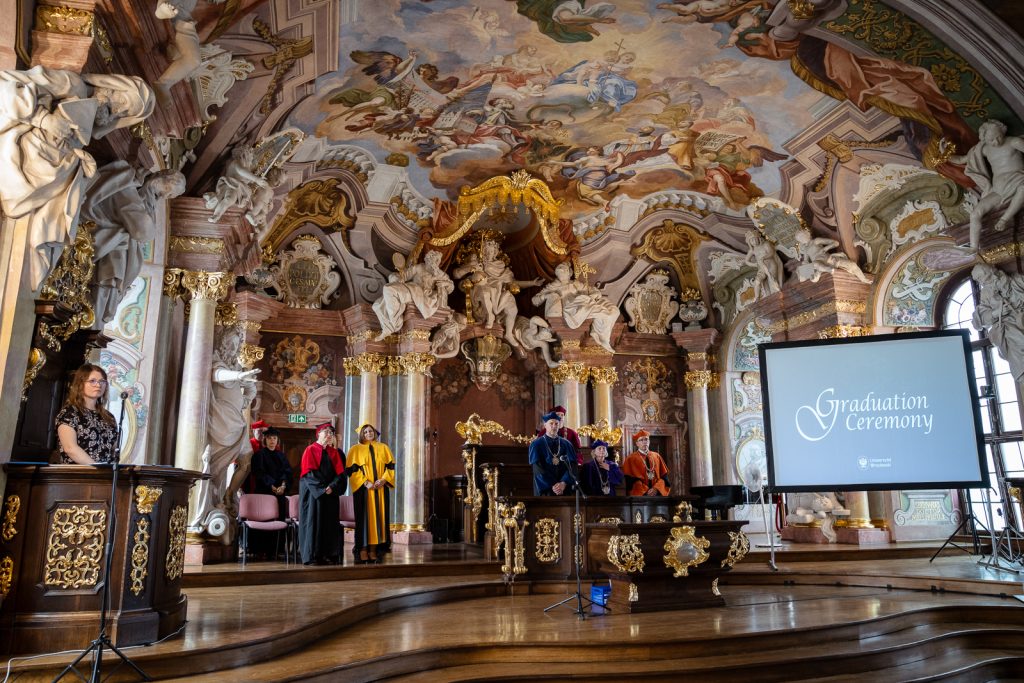
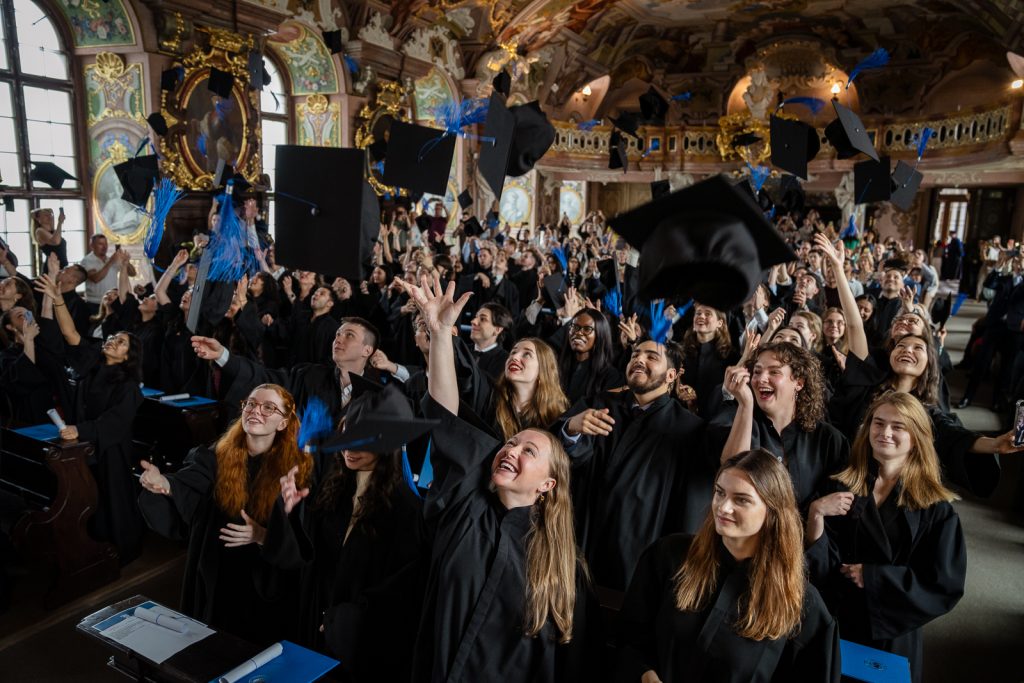
Wrocław is a dynamic academic city with a vibrant international student community and a strong cultural scene. Students benefit from the University’s support structures and integration initiatives, including Welcome Days and the Faculty’s Welcome Centre, which helps international students with practical matters and community-building.
Do you have more questions regarding the programme, application or study and life experience in Wrocław? Write to the programme coordinator: anna.cichecka@uwr.edu.pl
More Information
- Admission process step by step
- Required documents
- English language requirements
- Apply (Polish citizens) [link to be added]
- Apply (other nationals)
- ASIS detailed programme
- Syllabuses for courses [link to be added]


